What You Need to Know About Buying and Selling a Car in New Zealand
Getting around is one of the biggest problems to solve when planning a trip to New Zealand. It informs where you’ll go, what you’ll do, and what you can pack. I’ve seen New Zealand three ways: a semi-guided bus tour (Stray), the Intercity bus line, and car.
Having your own car is hands down the best way to see New Zealand if you want to be in complete control of your itinerary and you want to cut down on costs. Stray was a great option for my 5-week jaunt around the South Island back in 2014, but the cost is prohibitive these days and I wouldn’t be able to afford it now even if I wanted to spend that much time with other people (spoiler alert: I do not). The Intercity is a good option if you are only going to a few big places, have a small budget, and can’t or don’t drive. This can be combined with things like ridesharing or hitchhiking, which is still a valid way of getting around Aotearoa.
We knew going into our big trip around the South Island that we were going to buy a car. Having used the Intercity to get between a few major stops in the North Island the previous winter, it was clear that we wouldn’t be able to scratch the surface of what the South Island had to offer using public transportation. I will touch a little on the Intercity, including their travel pass, but generally, I don’t think it allows for the full NZ experience. As most people are probably investing a lot of time and money into this journey, you probably want it to be worth the effort.
Buying vs. Renting
While buying a car may seem like a bit more work than you’ll want to do, the cost savings is notable. Even if we had bought our car and driven it into the canal at the end (a thought I had every time another low-baller ghosted me) we still would’ve saved money over renting.
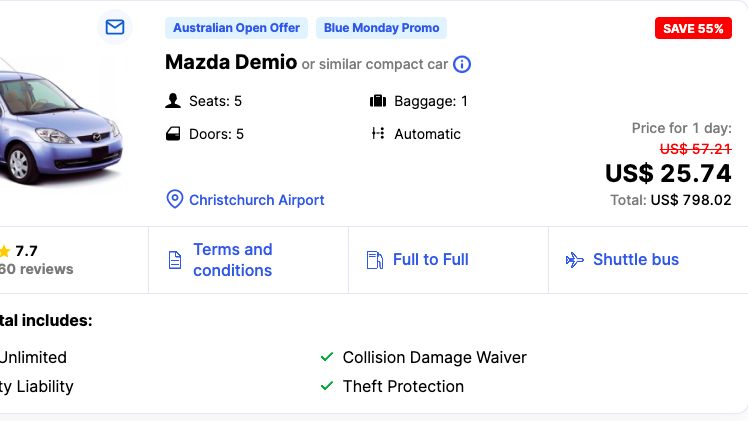
For example, to rent our exact car for one month would cost around $800 USD or NZD $1300. That means for the time we had it, it would’ve cost $5200 NZ to rent, with no recourse to get any of our money back by reselling at the end. This also doesn’t include the biggest expense of having the car, which is petrol.
There’s also the risk of damaging a rental, which can mean even more out-of-pocket costs. If we had scratched or damaged our car, we could’ve just sold it for less. This made driving around less stressful than if we were in a more pristine vehicle.
So while it may require a bit more admin and leg work, buying and reselling is hands down the way to go in my experience.
Buying a Car as a Tourist
When I first started looking into getting a car, I was surprised by how common an occurrence it was for tourists to buy a vehicle with the intention of selling it at the end of their trip. It’s so common, it’s a suggested mode of transportation on the country’s official transportation website. You don’t need an international driver’s permit if your license is in English, but you do need one if your license has non-English characters. Be sure to look into if this applies to you, as most countries require you to get an IDP before you leave your home country.
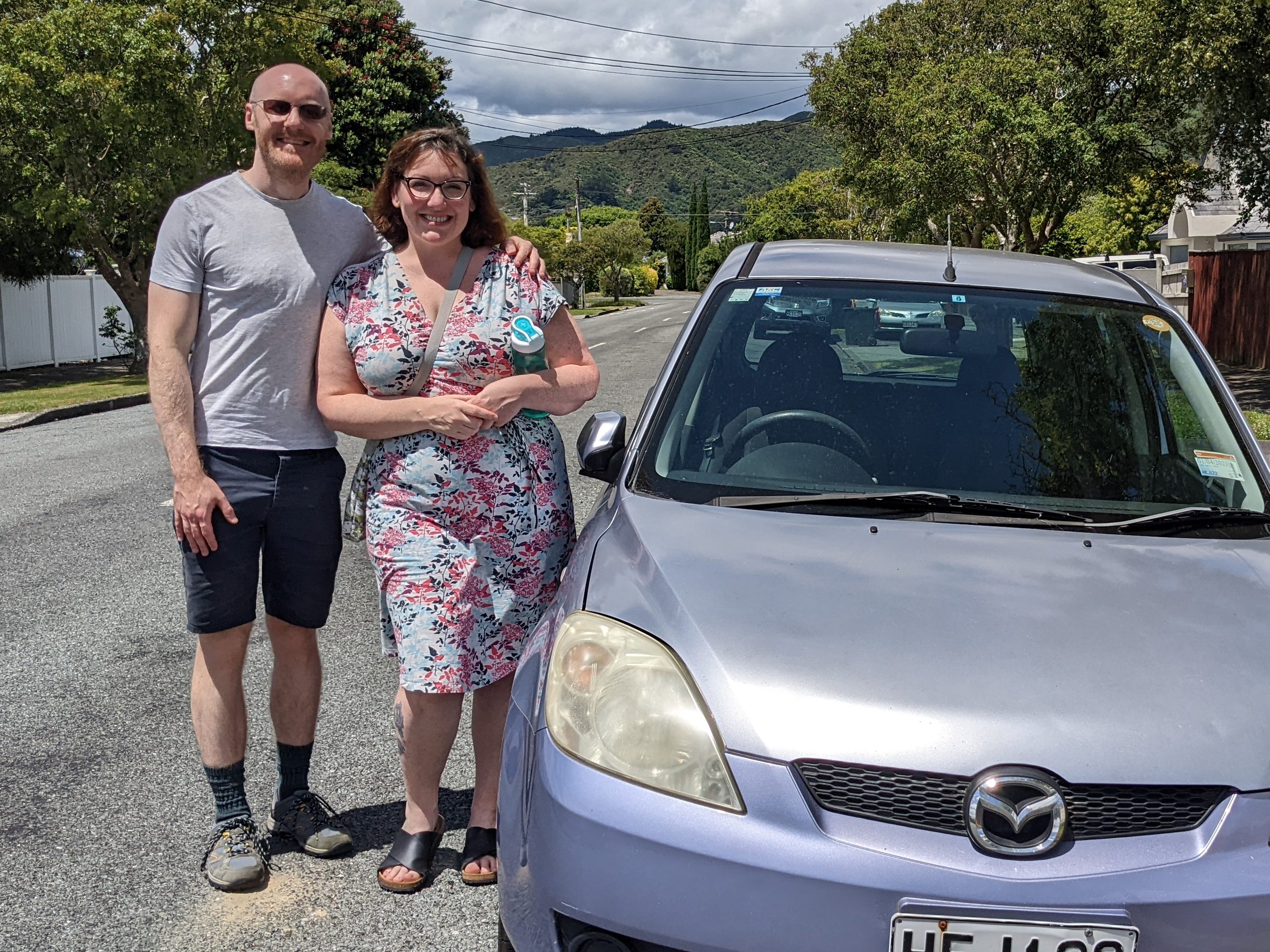
Having only bought cars in the United States, I found buying a car in New Zealand to be pretty straightforward.
There are a lot of affordable cars available on sites like TradeMe, as well as loads of vehicles at used car lots, especially in bigger cities and towns. Keep in mind that public transportation isn’t great anywhere in New Zealand, so shopping around for a vehicle outside of a dealership can be onerous without a car. Thankfully, our friend was on hand to drive us to see a few local cars, which saved us a lot of hassle.
We ended up buying our car in Wellington from a person who listed it on TradeMe, instead of dealing with a used car lot or a ‘Facebook dealership’. There are a lot of junkyards selling cars in Wellington, which may be a cultural norm, but coming from the US/UK, a junkyard seemed like the last place to buy a car I intended to drive over 2000 miles.
One logistical consideration you’ll need to make is how to pay for the car. International bank transfers take some time to go through, so if you’re buying from a person, it’s better to have cash. Dealerships will likely take debit cards, just make sure the card you use doesn’t charge any kind of foreign transaction fee, as these are usually a percentage of the purchase price.
We ended up paying part cash and part local bank transfer, again, thanks to our local friend’s assistance. The woman then transferred the vehicle to us online and we were off!
Getting Street Legal
Once you buy a car, you’ll need to transfer it into your name and get insurance. NZ drivers can release liability online, but international drivers need to go into a transport center to get their paperwork in order. Cars can be transferred at several locations, including post offices, and don’t require you to book an appointment, wait for hours, deal with disgruntled employees, or pay hundreds of dollars. This was a welcome surprise compared to what I was used to back in America. There was a small fee (NZ $8 in 2023) to transfer the title and that was it.
Depending on the vehicle, you may also need to register the car and get a WOF (Warranty of Fitness). I didn’t want to bother with either of these, so I looked for vehicles with On Road costs included. Sites like TradeMe will allow you to search for vehicles with On Road costs included, and even listings on Facebook Marketplace will mention whether or not you’ll need to get these things in order before you are road ready.
I wanted a car with an up-to-date Warranty of Fitness, because I hate dealing with mechanics. This again may come from only dealing with car-related tasks in the US, but getting an inspection has always filled me with anxiety. My thinking for our NZ purchase was that any car with a current WOF was probably in good enough condition that it wouldn’t need any major work done in the following three-ish months. Our registration was due to expire while we had the car, but it was very easy to renew it. You can opt for 3, 6, or 12 months of registration, which is a nice difference to the annual registration you pay in the US. I think we only paid $58 NZ for 6 months of registration fees, which again is dirt cheap compared to the US.
We topped up the rego before selling the car so that the next person wouldn’t need to rush to do it. Unlike in the US, you don’t need to transfer the registration every time you sell the car, just the title. Easy peasy.
Getting insurance was also very simple. I found a month-to-month plan that I bought online which was $27.25 NZ/month including glass cover. The woman I bought the car from recommended getting glass cover, and I’ll pass that recommendation on to you. Glass cover insures you 100% if your windows get smashed or your windscreen gets cracked. You may think you won’t need it, until you start seeing piles of glass in all the parking lots and hearing the rocks pinging off your windscreen when you’re driving down one of NZ’s hundreds of gravel coated ‘highways’. Our glass remained intact, but I’d buy it again, every time.
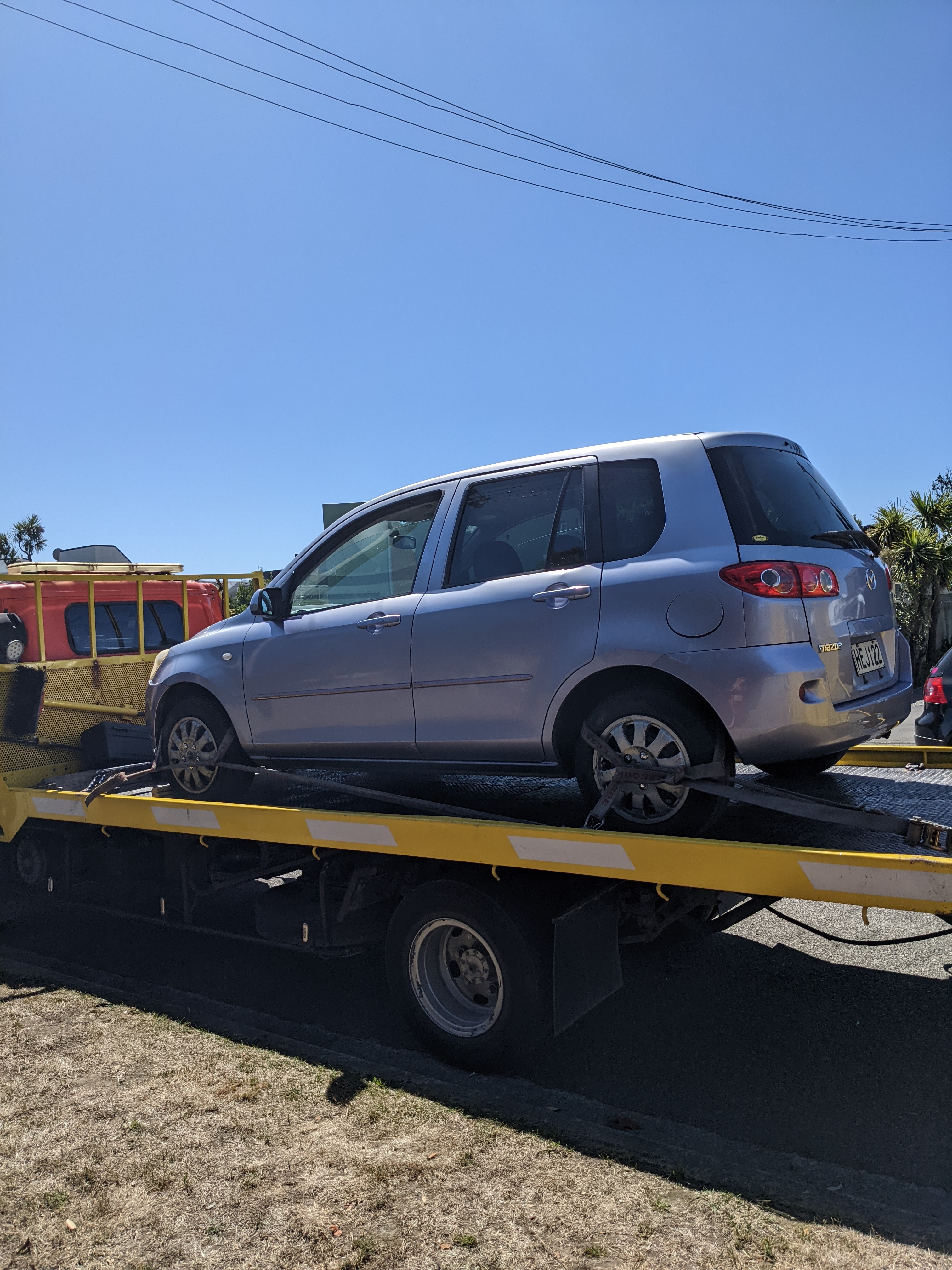
We also opted for an AA membership. This not only covers you in case of a break down, it also boasts some pretty good discounts. For instance, we got 15% off our ferry journey (a $30 discount) and we got the AA price at partner gas stations. It also has other discounts that you can see on their website. We did end up using them when our car started leaking petrol and the service was far and wide much better than anything I’ve received from AAA in the states. I ended up paying a $20 out-of-area fee for the tow, but otherwise they charged us nothing to inspect the problem. (As an aside, don’t fill your car to the brim with petrol and then park on a steep hill. Just saying.)
Another insurance feature we used was a steering wheel lock. Now, before you dismiss all this as overkill, I will say that New Zealand is an incredibly safe country. I would hitchhike there, I would walk around in the dark by myself, I would probably knock on a stranger’s door if I needed help. It’s safe.
But. Petty crime is a thing, especially stealing cars (especially little crappy cars like ours) either to rip out and sell the catalytic converter or just to have a bit of a joy ride and then park it somewhere on the side of the road.
No less than 5 people we talked to mentioned car theft – especially of Mazda Demios – in our four months driving around.
Since our car was by extension our home, we wanted to do everything we could to keep it safe. So we used a steering wheel lock every time we left the car.
What Type of Car to Buy
The type of car you buy will hinge on a few factors. Namely: price, condition, engine size, drive type, and gas mileage. We wanted a small car that was good on gas more than we wanted the ability to go off-road or sleep in the back. So we went with a 2006 Mazda Demio. I loved this little car and it really did us well on our journey. The downsides of it were the engine size, which at 1500cc struggled to get up some of the steeper hills and mountain passes. However, we kept passing the Jucy vans, so we were doing better than some.
Another issue we had was the amount of gravel roads we encountered. We didn’t want to off-road, but even on-roading became a problem in some areas around Lake Tekapo and the Catlins. It ended up just not being worth it to bounce down a rocky trail to see yet another lake. If you want absolutely no barriers between you and the great wide open, I’d recommend something with larger tires, better suspension, and a bigger engine.
If you do decide to go with a smaller car, we found that Googling our destination and looking at reviews would give us some insight on what the driving conditions were. Likewise, looking at Google Street View can give you an idea of what you may be faced with, although constant updates to roads means this information can become outdated rather quickly.
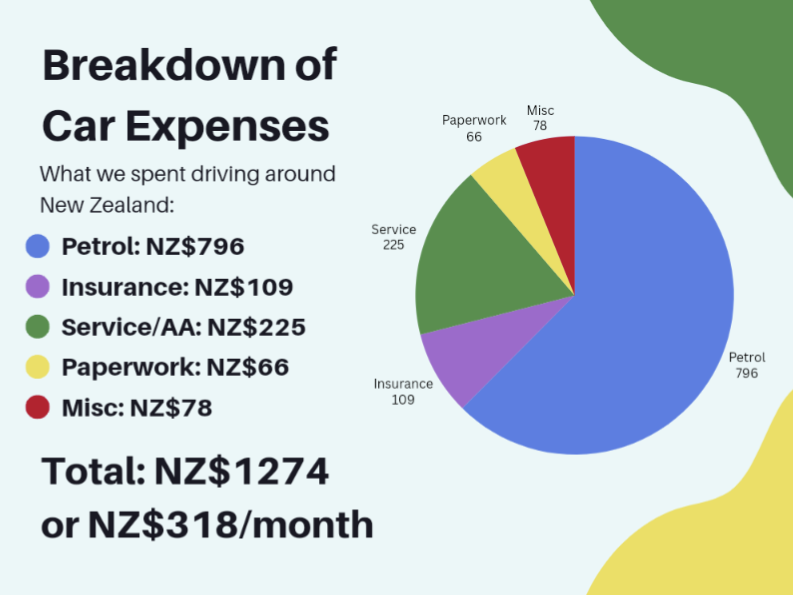
What our little car lacked in off-roading capabilities, it made up for in gas mileage. We were getting something like 500 kms to the tank, which meant filling up much less and spending less money overall on our trip. Gas was the biggest expense of driving, but the freedom it provided was worth it.
Driving in New Zealand
Driving in New Zealand is another time when the statement “New Zealand is safe” doesn’t always apply. NZ drivers can be aggressive. There are tons of huge freight trucks hauling all types of cargo from precariously stacked logs to skips full of garbage that is flying out of the back and bouncing off your windscreen. There are also just the regular drivers, who are in a big hurry for some unknown reason. Worse still are the international drivers, who are plentiful in tourist areas and give a new meaning to driving defensively.
But, in general, we didn’t have any major issues. There are lots of winding roads, but they are well-paved and tended to. In fact, NZ is probably some of the nicest driving I’ve ever done. The downside to these gorgeous motorways is the amount of stops you’ll have to do for road works. There are frequent stretches all over the country where the speed limit will drop suddenly from 100 to 20 and you’ll crawl along as to not pummel the guy behind you with a tire full of rocks (thanks, glass insurance!). This factors into planning and time management, since it’s a reality that you are not getting to your destination at the time you think you are.
In preparation for this guide, I looked at a lot of Reddit threads of people planning a trip to New Zealand. The amount of overzealous itineraries was incredible. “Can I see both islands in two weeks?” “Can I drive from Christchurch to Milford Sound and back in one day?” “But Google Maps says it only takes four hours!”
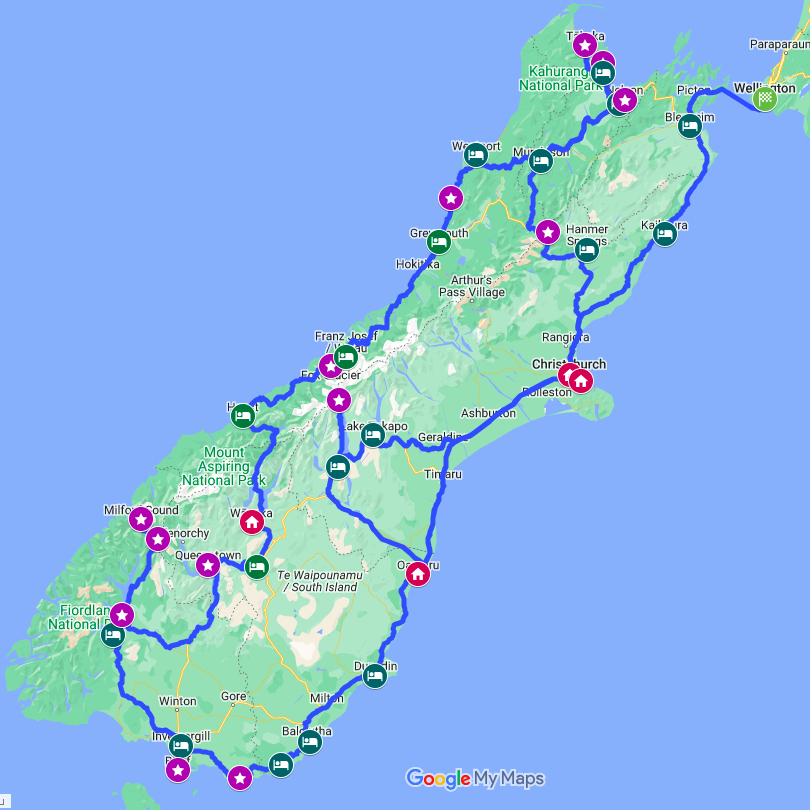
Google Maps doesn’t understand New Zealand. It doesn’t understand its roads, its traffic, its construction, or its natural beauty. Planning a trip to New Zealand requires an understanding that everything is going to take longer and you probably won’t have enough time to do and see everything you want to.
That being said, we spent four months driving around New Zealand, but only about six weeks actively seeing the sights. As house sitters, we factor in down time, and purposely planned to have a cooling off period at the end of our trip to sell the car and off load some of our stuff. You can probably go faster, but it sort of goes against the entire ethos of the place. I do recognize that not everyone can take six weeks to see New Zealand, so I will offer suggestions for shorter trips in another blog.
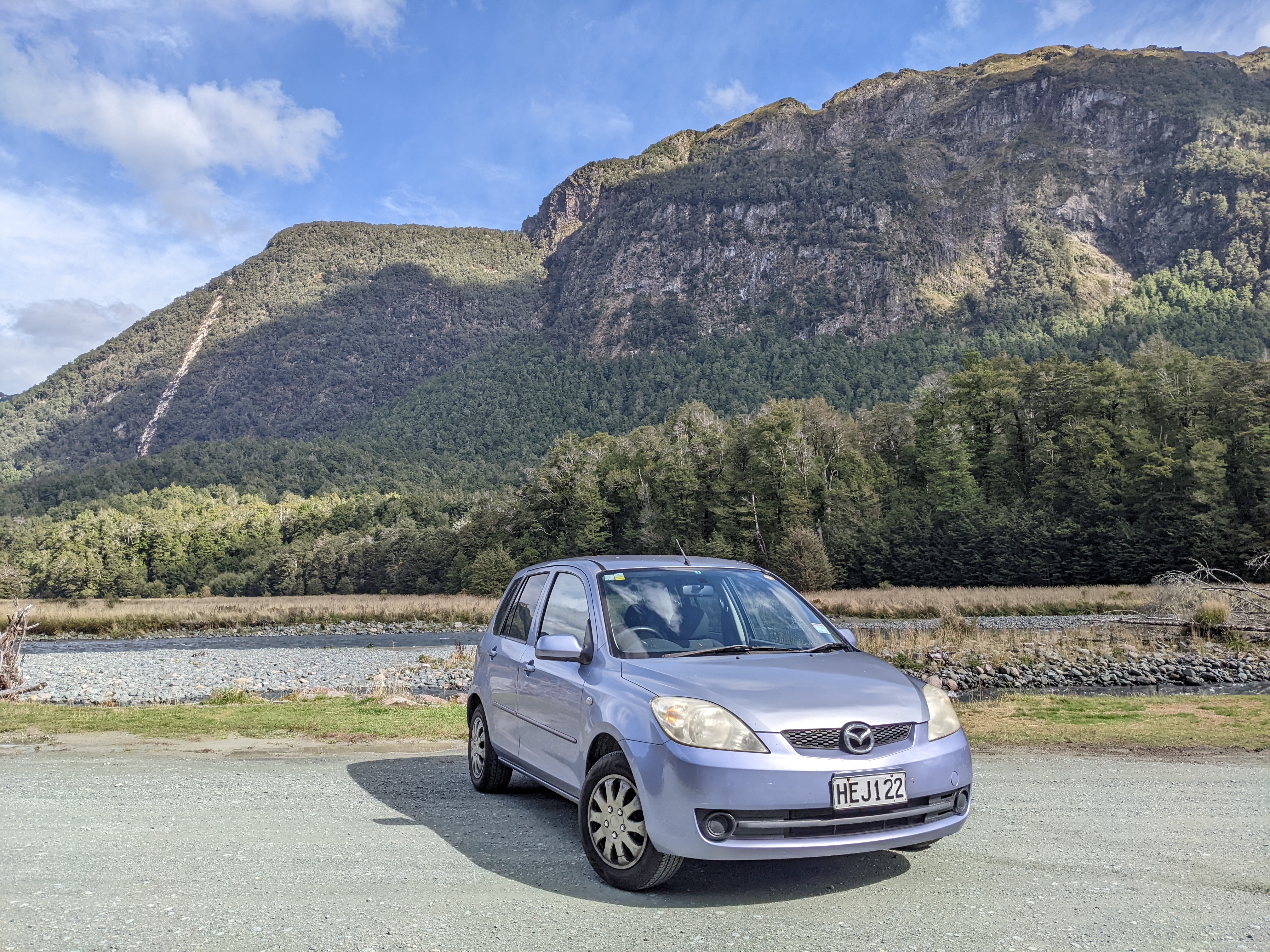
When it comes to driving, expect to be exhausted. Some of the driving is very straightforward and you won’t need to use 100% of your brain. Some of it requires all system go and you’ll be maneuvering sharp turns, winding roads, huge trucks, crazy drop offs, and bad weather. Take your time, take lots of breaks, and take in the views! Thankfully, NZ knows how beautiful it is, so there are lots of signposted opportunities to pull off the road and have a proper look around. Many roadside attractions even have some walking paths built in so you can stretch your legs.
In addition to marking your destinations, you’ll do well to mark petrol stations, roadside cafes, and points of interest along the way. We almost got stuck with an empty tank twice because we didn’t know there would be no gas station for 200 kms.
Selling Your Car
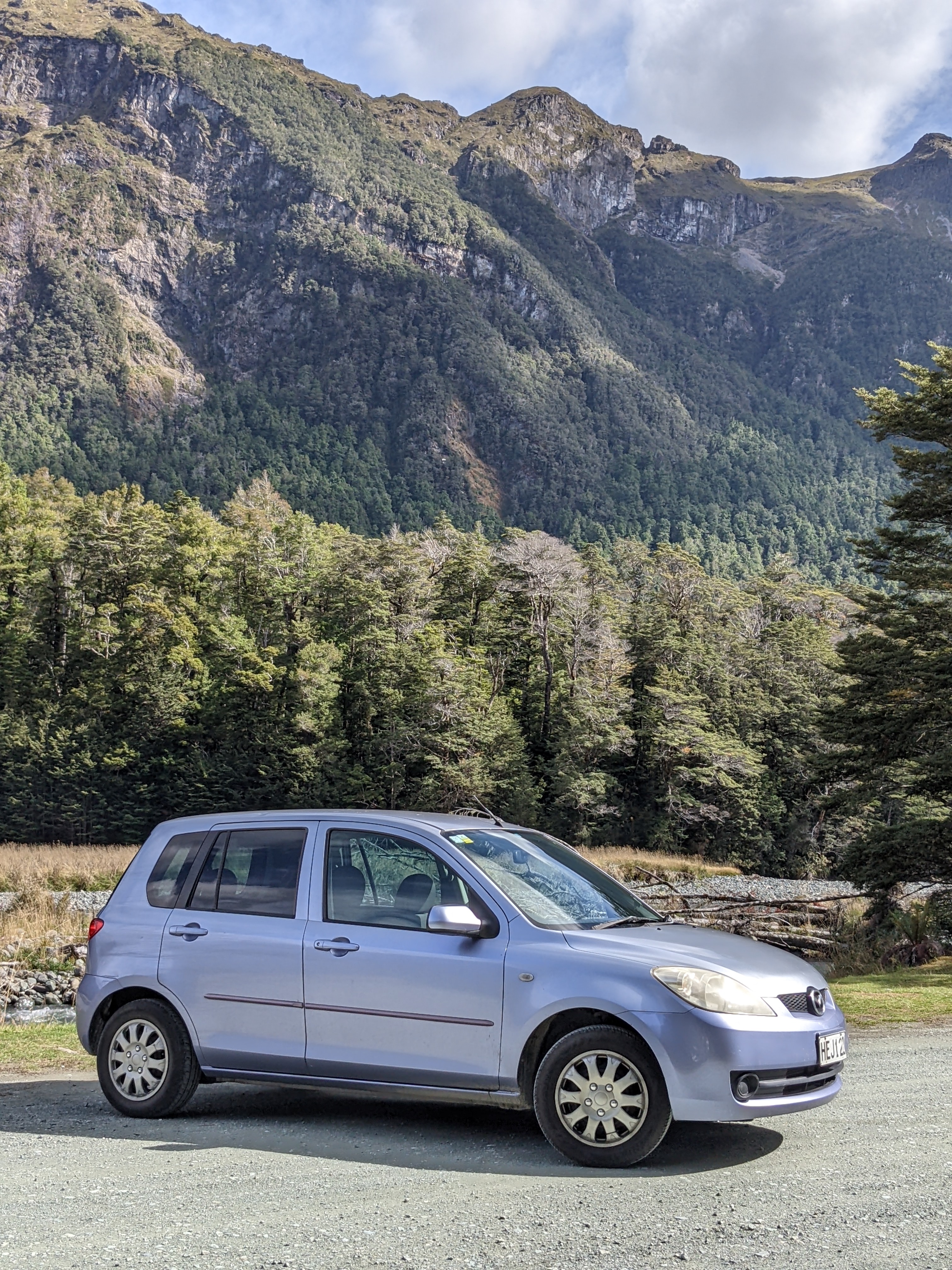
Selling the car at the end took a few weeks, but it worked out as best as it could. We bought the car for NZ$3850, and we sold it for $3800. We did get a full tune up done at AA for $200, but coming out almost even was the best case scenario. Had we struggled, we would’ve been happy to sell it for much less, but thankfully we were in Christchurch, which is the entry point for a lot of tourists and home to a lot of students and first-time car buyers. We did actually end up selling it to a local who was in the market for her first car, however, we did have a lot of messages from international buyers who were looking for their own road trip car.
The most messages we received were from hobbyist dealers looking to get the car for as little as possible. These guys are annoying, and made the process a lot more irritating than it needed to be. Even the ones that we engaged with and set up a time to show the car to never showed. It’s a strange phenomenon that I’ve never encountered elsewhere.
Driving New Zealand: Ultimate Freedom
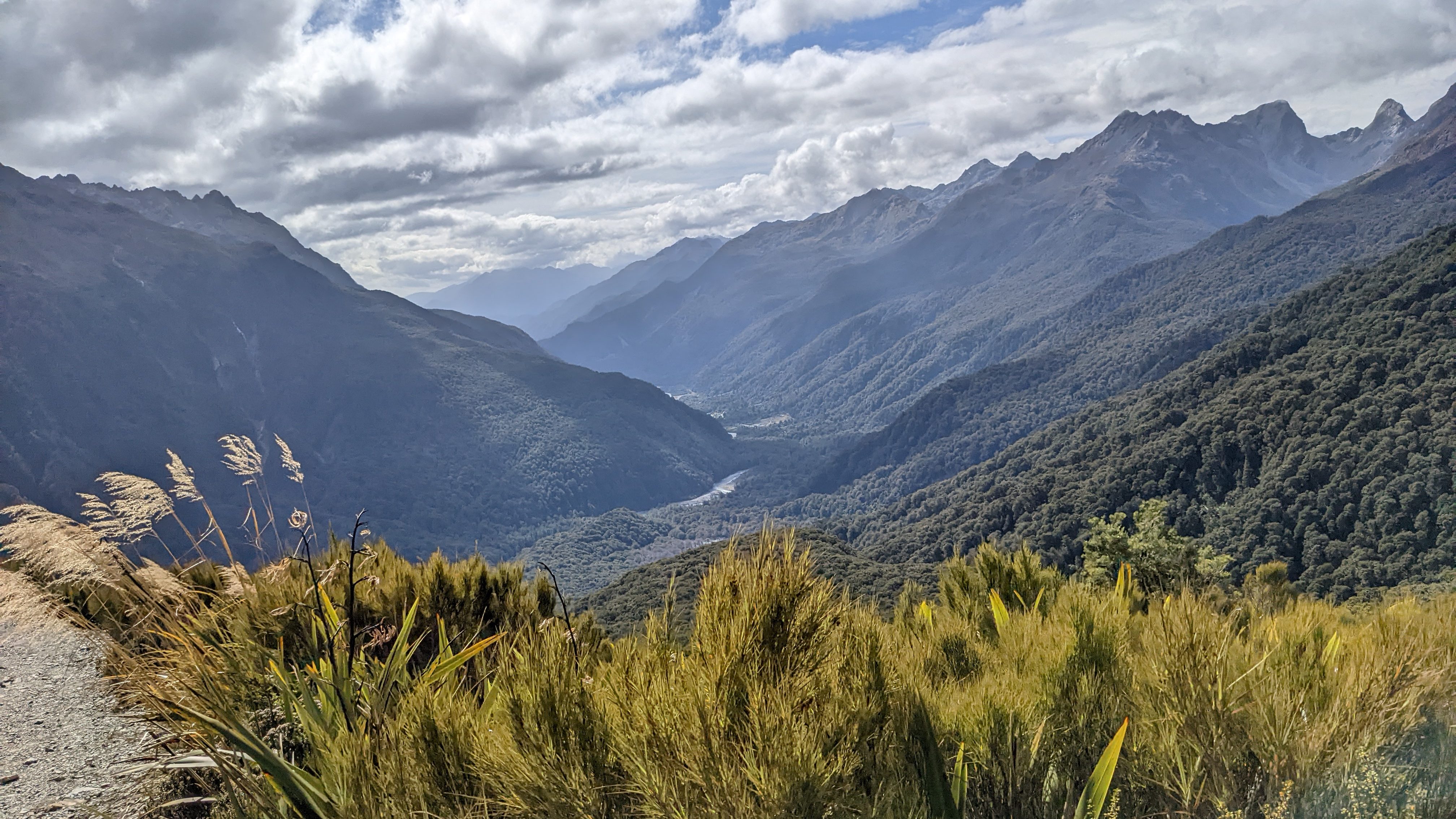
New Zealand is a place meant to be explored. Taking a bus tour, using public transportation, or even hitch-hiking means you are only scratching the surface of what this amazing country has to offer.
Overall, buying and selling a car as a tourist is easier and more cost effective in New Zealand than in most other countries around the world. The culture of buying a car, driving around for a few months or even a few weeks, and then selling at the end is much more common here than one might expect, but this only underlines how crucial your own vehicle is to creating the trip you want.
 Jetsetting Petsitters